GLP-1 muscle loss has become one of the biggest health conversations of the year, and for good reason.
Medications like Ozempic, Wegovy, and Zepbound have changed weight loss almost overnight. Millions of people are eating less than they have in years.
But when you lose weight quickly, not all of it comes from fat.
This isn’t a post about whether you should take these medications. That’s between you and your doctor. Instead, it’s about what to eat and do if you are, especially if you eat plants.
What the research shows (lean mass isn’t the same as muscle)
The best-known data comes from the STEP 1 trial of semaglutide. In a group of 140 participants who had body composition scans, people lost about 15% of their body weight over 68 weeks.
Their fat mass dropped by about 19%. Their lean mass dropped by about 10%.
That lean mass number sounds scary. However, lean mass on a DXA scan isn’t the same thing as muscle. It also includes water, organs, and other non-fat tissue. And because people lost fat faster than lean tissue, their overall body composition actually improved.
So headlines claiming these drugs melt your muscle go too far. Still, losing some lean tissue is real, and it tends to happen with most large weight loss, not just medication.
Why does that matter? Because muscle supports your strength, your metabolism, your balance, and your ability to stay active as you age.
What experts recommend for GLP-1 muscle loss
In 2025, four professional groups published a joint advisory on nutrition for people using GLP-1 medications: the American College of Lifestyle Medicine, the American Society for Nutrition, the Obesity Medicine Association, and The Obesity Society.
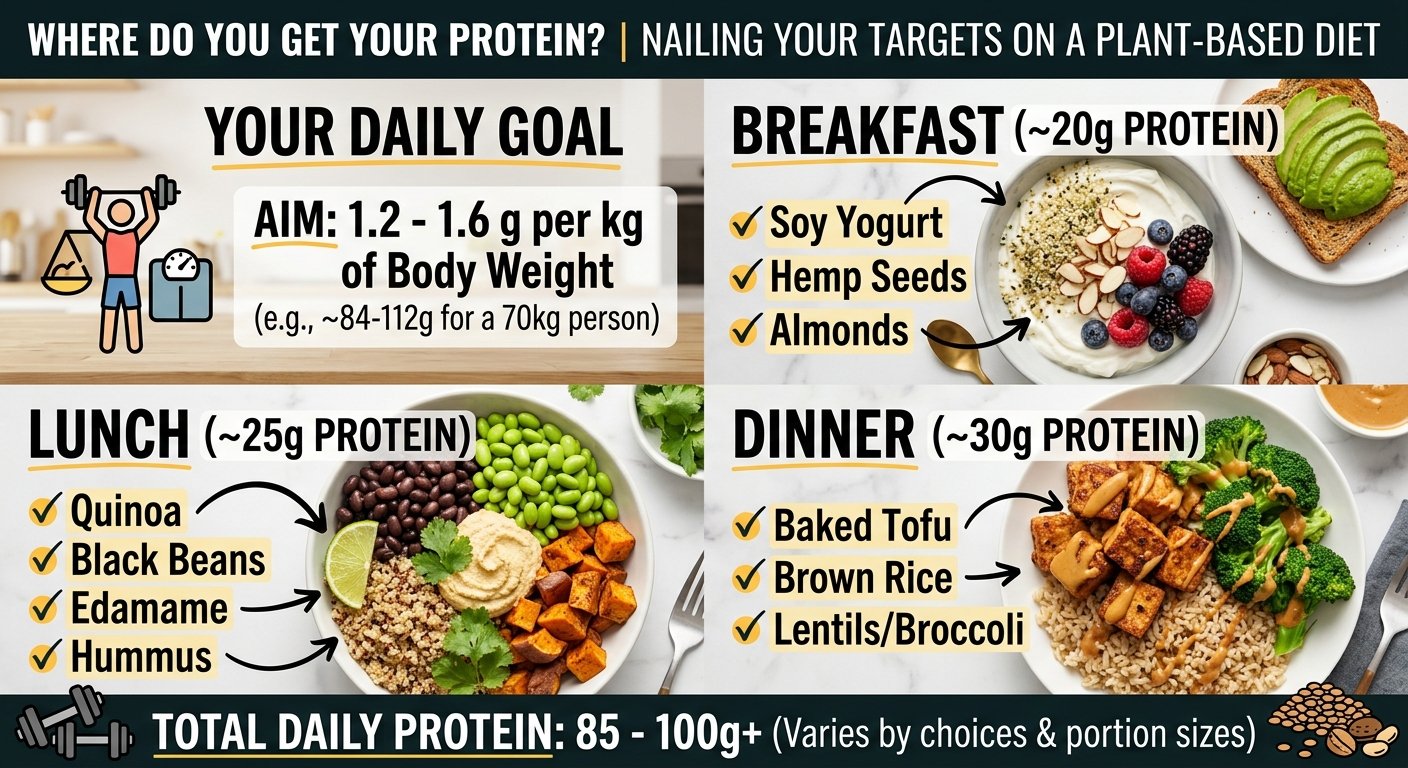
Among its recommendations is a protein intake of 1.2 to 1.6 grams per kilogram of body weight per day during active weight loss.
Strength training is the other half. The broader weight-loss research strongly supports resistance exercise for holding on to lean mass. That said, we still need more trials testing it specifically alongside these medications.
Why GLP-1 muscle loss is trickier on plants (smaller appetite)
Here’s where it gets tricky for plant-based eaters.
GLP-1 medications reduce appetite. That’s the whole point. But many plant proteins come packaged with a lot of fiber and volume.
Normally, that’s a huge advantage. Fiber keeps you full, which is exactly why I’m such a fan of it. However, when your appetite is already small, a big bowl of lentils might fill you up long before you’ve hit your protein target.
So the goal shifts. Instead of just eating more protein, you want more protein per bite.
How to prevent GLP-1 muscle loss on a plant-based diet
Here’s what that looks like in practice:
- Lead with the dense options. Tempeh, seitan, firm tofu, and edamame deliver a lot of protein in a small volume.
- Eat your protein first. Start each meal with the tofu or tempeh, then move on to the grains and vegetables.
- Drink some of it. Soy milk has about 7 grams of protein per cup, and a smoothie often goes down easier than a full meal.
- Use protein powder without guilt. This is exactly the situation where a scoop of pea or soy protein makes sense.
- Spread it out. Several smaller protein servings through the day may be easier than one big dinner.
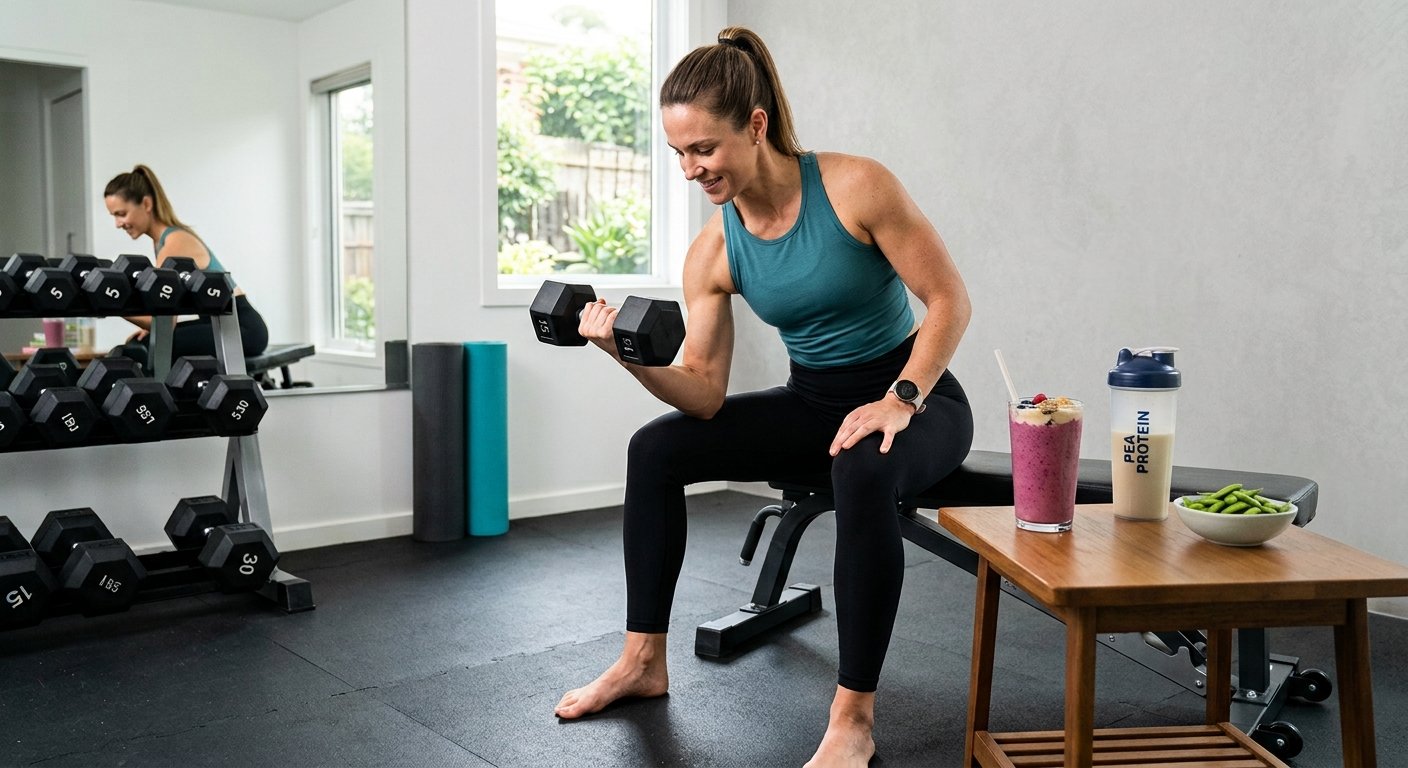
- Lift something. Regular strength training is what tells your body to keep the muscle you’re feeding.
And here’s the good news. Plant protein can absolutely build muscle. In a 2021 study, vegans and omnivores gained the same amount of leg muscle during 12 weeks of strength training when their protein intake was matched.
What’s your protein number?
Let’s do the math, because protein is your first line of defense against GLP-1 muscle loss. For a 90 kg (about 200 lb) person, 1.2 to 1.6 g/kg works out to roughly 108 to 144 grams a day.
That’s a big number with a small appetite. It’s reachable on plants, but it won’t happen by accident. My guide on how to hit your protein on a plant-based diet walks through a real day of eating.
One note: for people with a lot of weight to lose, clinicians sometimes calculate protein from an adjusted or goal weight instead of current weight. Ask your care team which number to use.
Don’t forget the other nutrients
Eating less food overall means less room for everything else too. So if you’re plant-based and taking one of these medications, the nutrients every plant-based eater should plan for matter even more.
One caveat
Most of what we know about GLP-1 muscle loss comes from body scans in smaller substudies, and lean mass measurements have real limitations. We also don’t have strong trials testing plant-based diets specifically in people taking these medications.
Everything here is general information, not medical advice. If you’re on a GLP-1 medication, work with your prescriber and ideally a registered dietitian. They can set the right protein target for you and keep an eye on your labs.
The bottom line
GLP-1 muscle loss isn’t a reason to panic, but it is a reason to plan.
Prioritize protein, choose dense plant sources, lift weights, and treat the scale as just one number.
Your muscle is worth protecting at any weight.
Be Good And Do The Right Thing.
References
- Wilding JPH, et al. Once-weekly semaglutide in adults with overweight or obesity (STEP 1). N Engl J Med. 2021;384:989–1002.
- Mozaffarian D, et al. Nutritional priorities to support GLP-1 therapy for obesity: a joint advisory from the American College of Lifestyle Medicine, the American Society for Nutrition, the Obesity Medicine Association, and The Obesity Society. 2025.
- Hevia-Larraín V, et al. High-protein plant-based diet versus a protein-matched omnivorous diet to support resistance training adaptations. Sports Med. 2021;51(6):1317–1330.