“Where do you get your protein?” It’s the question every plant-based eater has heard roughly ten thousand times. And while the panic behind it is overblown, the underlying question is fair: protein does matter, and it’s worth knowing how to hit your target on purpose rather than hoping it works out.
So let’s do the actual math, and then build a real day of eating around it.
How much protein do you actually need?
The baseline recommendation (the RDA) is 0.8 grams of protein per kilogram of body weight per day. For a 70 kg (154 lb) person, that’s about 56 grams. That number is the floor to prevent deficiency — not necessarily the target for someone who’s active or aging.
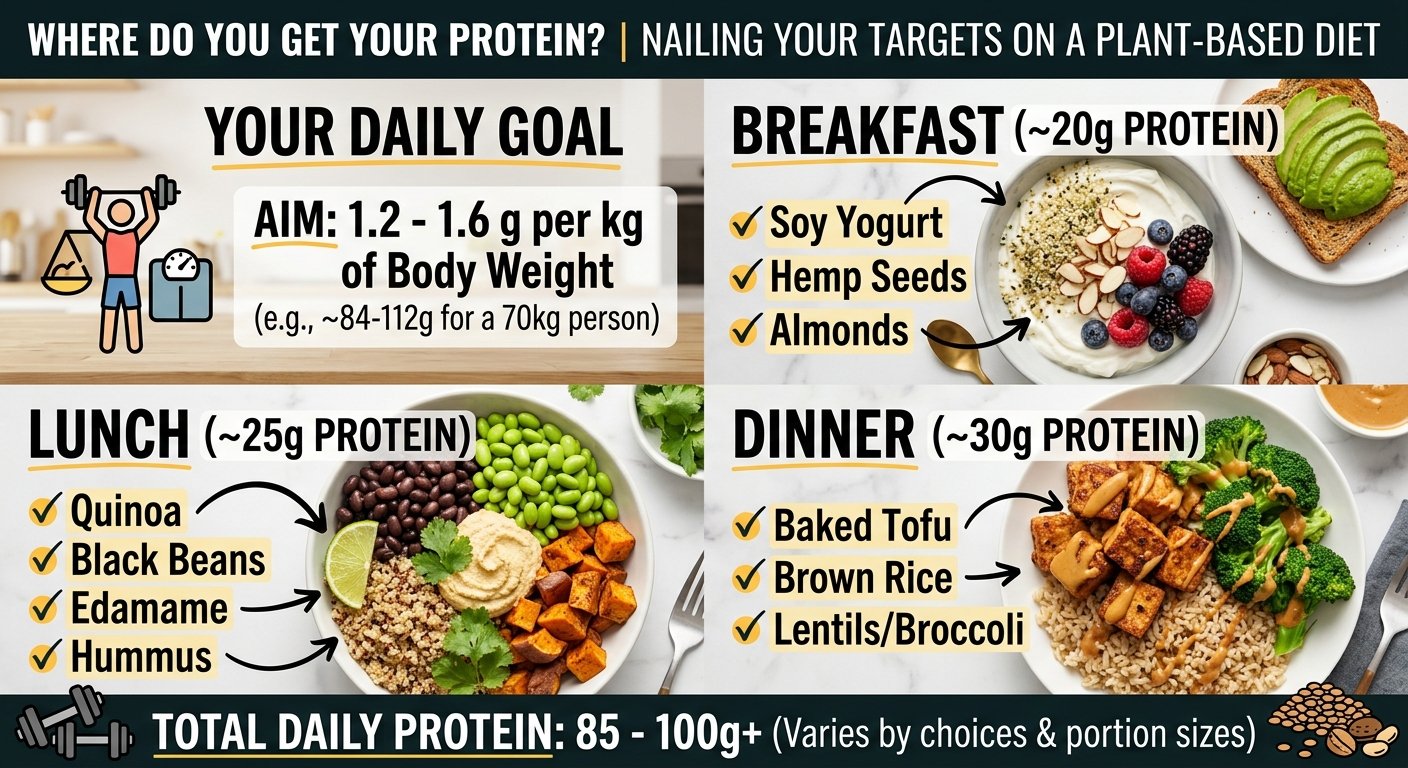
Most nutrition researchers now suggest a range of 1.0 to 1.6 grams per kilogram for people who exercise, are older, or are actively building or preserving muscle. A practical middle-ground target many plant-based eaters aim for:
- Roughly 1.2 g per kg if you’re moderately active — about 84 g for that same 70 kg person
- Up to 1.6 g per kg if you strength-train seriously or are over 60 and protecting muscle
Don’t overthink the exact figure. The point is to have a number in mind so you can see whether you’re in the ballpark.
The protein content of common plant foods
Here’s roughly what you’re working with (protein per typical serving):
- Lentils — ~18 g per cooked cup
- Tofu (firm) — ~20 g per cup, cubed
- Tempeh — ~30 g per cup
- Chickpeas / black beans — ~15 g per cooked cup
- Edamame — ~17 g per cup
- Seitan — ~21 g per 3 oz (the highest-protein plant option)
- Soy milk — ~7 g per cup (vs. ~1 g for most nut milks)
- Quinoa — ~8 g per cooked cup
- Peanut butter — ~7 g per 2 tbsp
- Hemp seeds — ~9 g per 3 tbsp
- Oats — ~5 g per half-cup dry
Notice the pattern: legumes and soy foods do the heavy lifting. Grains, nuts, and seeds add meaningful amounts on top. String enough of them together and the total adds up fast.
A real day that hits ~90 grams
Here’s what an ordinary, non-fussy day looks like when you build each meal around a protein anchor:
Breakfast (~20 g): Oatmeal made with soy milk, topped with 2 tbsp peanut butter and a spoonful of hemp seeds. Oats ~5 g + soy milk ~7 g + peanut butter ~7 g + hemp ~3 g.
Lunch (~25 g): A grain bowl with a cup of cooked quinoa (~8 g) and a cup of chickpeas (~15 g), plus veggies and tahini. Simple, filling, mostly hands-off.
Dinner (~35 g): Stir-fry with a cup of cubed firm tofu (~20 g) over a cup of cooked lentils or a second grain, with edamame stirred in (~15 g). This is your biggest protein hit of the day.
Snack (~10 g): A handful of roasted edamame, a soy yogurt, or a couple squares of dark chocolate with almonds. Small, but it closes the gap.
Total: roughly 90 grams, without a single protein powder, without weighing anything, and without eating like it’s a chore. That comfortably covers even the higher 1.2 g/kg target for most people.
Five habits that make it automatic
- Anchor every meal with a legume or soy food. If beans, lentils, tofu, tempeh, or edamame are on the plate, you’re most of the way there.
- Swap nut milk for soy milk. It’s a free ~6 g every time you’d use milk anyway — in coffee, oats, or smoothies.
- Keep a protein topping on the counter. Hemp seeds, pumpkin seeds, or peanut butter turn any snack or breakfast into a protein source.
- Cook legumes in bulk. A big batch of lentils or chickpeas at the start of the week means the anchor is always ready.
- Learn where seitan and tempeh fit. When you want a big protein number in a small volume of food, these two are your friends.
Do you need protein powder?
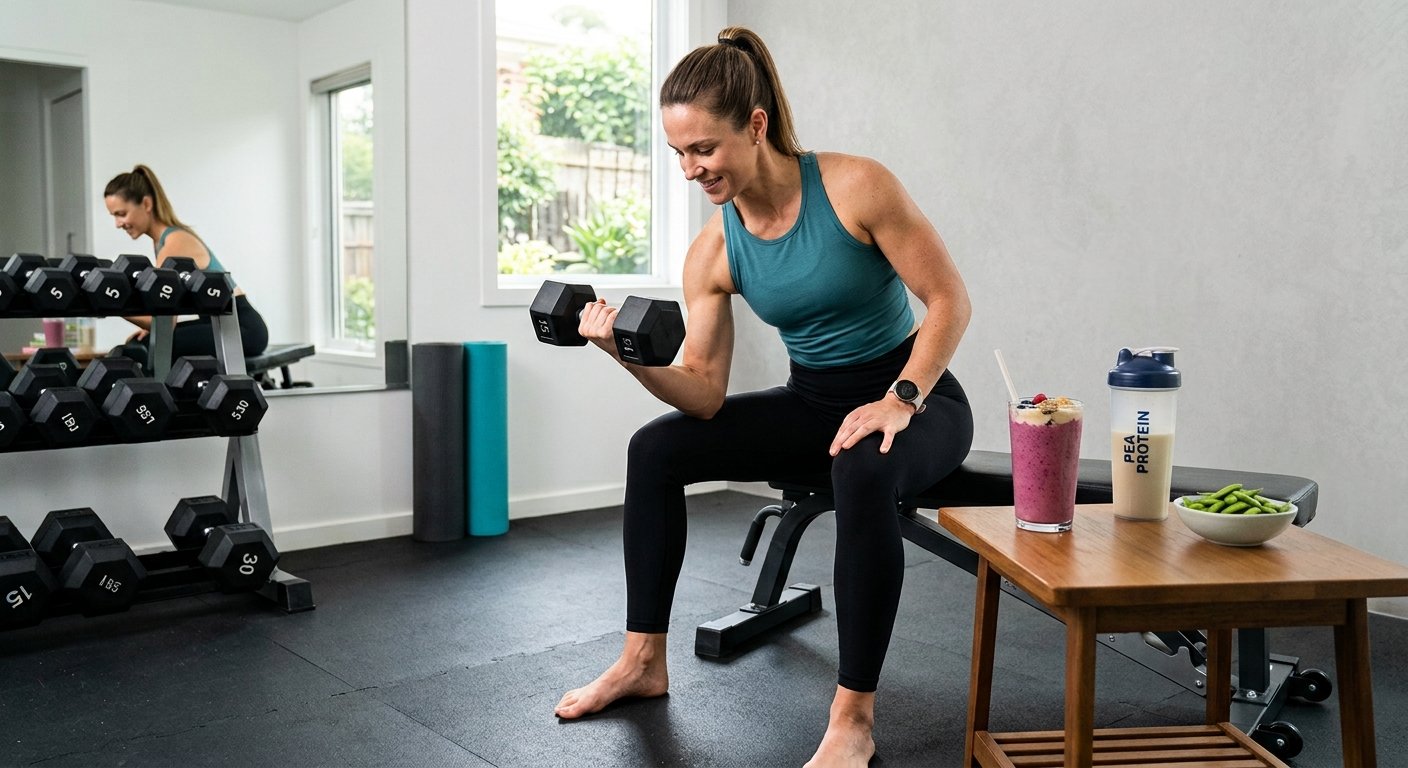
For most people, no. Whole plant foods get you there. But powder isn’t cheating — it’s just convenient. A scoop of pea or soy protein (~20 g) in a smoothie is a reasonable tool if you’re an athlete with high needs, you’re short on time, or your appetite is small. Treat it as a shortcut, not a foundation.
One honest caveat
The gram counts above are approximate — real values shift by brand, variety, and how you measure. This is a framework for eyeballing your intake, not a precise nutrition prescription. If you have specific medical, athletic, or age-related protein needs, a registered dietitian can dial it in for your body. For the average person, though? Anchor your meals, add variety, and you’ll clear your target without ever opening a tracking app.
Be Good And Do The Right Thing.