A well-planned plant-based diet is one of the healthiest ways a person can eat. It tends to be higher in fiber, richer in phytonutrients, and lower in the things most diets have too much of. But “well-planned” is doing real work in that sentence.
Because there’s a short list of nutrients that plants either don’t contain, or contain in a form your body struggles to use. The good news: it’s a short list, and each one has a simple, well-established fix. Here are the four worth your attention — and what to actually do about each.
1. Vitamin B12 — the non-negotiable one
If you take one thing from this article, make it this. Vitamin B12 is the single nutrient that genuinely isn’t reliably available from plant foods in usable amounts. It’s produced by bacteria, not plants or animals — animals just accumulate it. On a plant-based diet, you have to get it another way, full stop.
Why it matters: B12 is essential for nerve function and red blood cell formation. A deficiency can creep up slowly over months or years, and by the time symptoms like fatigue, tingling, or cognitive fog appear, damage may already be underway. Some of it can be permanent. This is not one to gamble on.
The fix: Supplement, reliably. Common approaches are a daily dose in the range of 25–100 mcg, or a larger once-weekly dose (around 2,000 mcg) — B12 absorption is inefficient at high single doses, which is why the weekly number looks so large. Fortified foods (many plant milks, nutritional yeast, some cereals) help, but a dedicated supplement is the dependable route. Cyanocobalamin and methylcobalamin are both fine forms.
2. Omega-3 (EPA and DHA) — the conversion problem
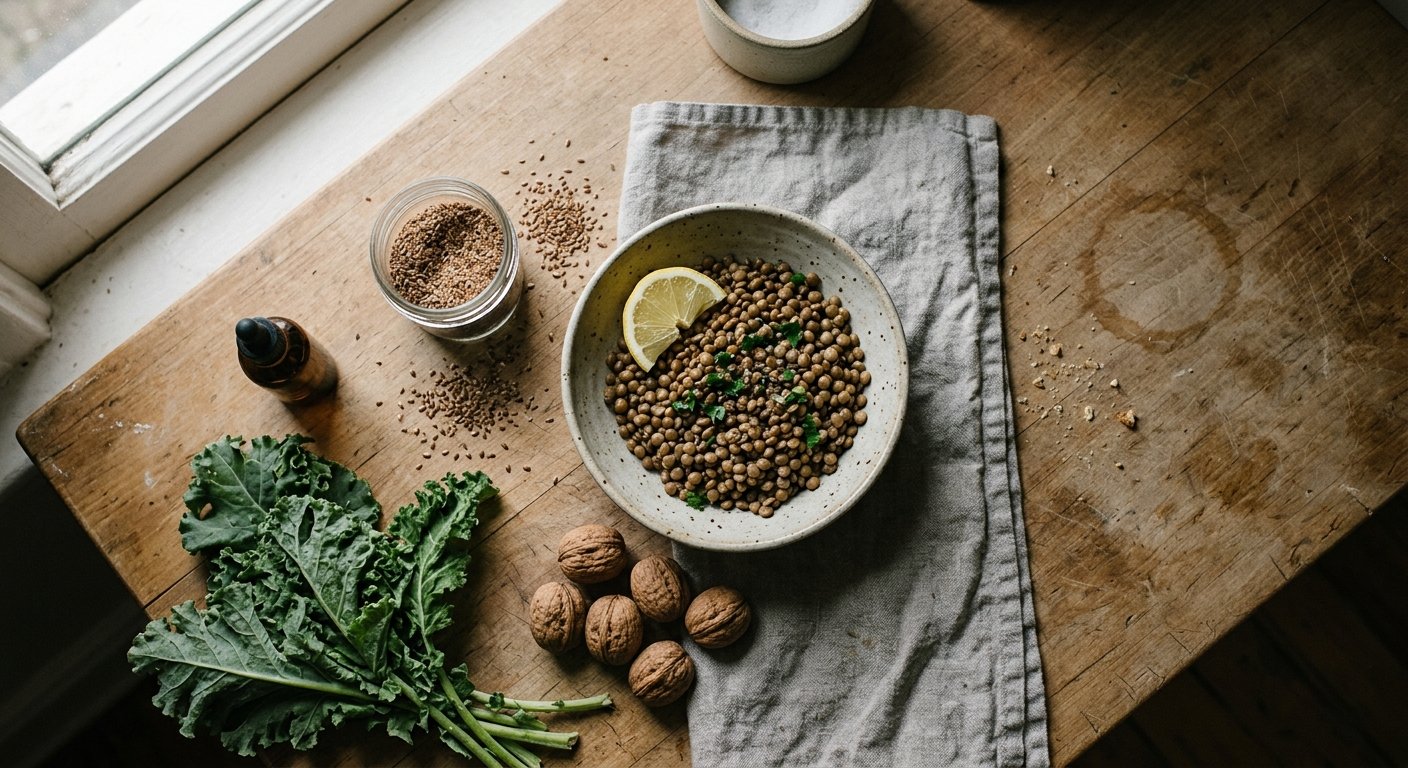
This one is more subtle. Plants like flax, chia, and walnuts contain omega-3 — but in the form called ALA. The forms your brain and heart actually run on are EPA and DHA. Your body can convert ALA into those, but the conversion is inefficient, sometimes only a few percent.
Why it matters: EPA and DHA support heart health, brain function, and healthy inflammation levels. Relying on conversion alone may leave some people short, especially those with higher needs.
The fix: Eat ALA sources daily — a tablespoon of ground flax or chia is an easy habit — and consider an algae-based EPA/DHA supplement. Algae oil is elegant here: fish get their omega-3 from algae in the first place, so an algae supplement goes straight to the source and skips the fish entirely.
3. Iron — present, but harder to absorb
Plant foods contain plenty of iron. Lentils, beans, tofu, pumpkin seeds, and leafy greens are all solid sources. The catch is the form: plants provide non-heme iron, which your body absorbs less readily than the heme iron in meat.
Why it matters: iron carries oxygen in your blood. Running low leads to fatigue and, eventually, anemia. Menstruating women are at higher risk simply due to monthly losses, regardless of diet.
The fix: You mostly work with absorption, not just intake.
- Pair iron with vitamin C. Squeeze lemon on your lentils, add bell peppers to your bean bowl, have fruit with the meal. Vitamin C dramatically boosts non-heme iron absorption.
- Separate iron-rich meals from coffee and tea. The tannins in both inhibit absorption — give it an hour on either side.
- Don’t blindly supplement. Excess iron is genuinely harmful. Test first if you’re concerned, and supplement only if a blood test says you need to.
4. Vitamin D — the one nobody gets from food
Here’s the twist: vitamin D isn’t really a plant-based problem — it’s an everybody problem. Very few foods contain meaningful vitamin D regardless of diet, and a large share of the population is low or deficient no matter how they eat, largely because we spend our days indoors.
Why it matters: vitamin D is critical for bone health, immune function, and mood. Your skin makes it from sunlight, but latitude, season, skin tone, sunscreen, and office life all cut into that.
The fix: Get sensible sun exposure when you can, lean on fortified foods (many plant milks are fortified), and supplement — especially in the darker months. Look for vitamin D3 labeled vegan (lichen-derived); older D3 supplements were made from sheep’s wool, while D2 is always plant-based but somewhat less potent.
The honorable mentions
Two more deserve a quick nod. Iodine can fall short without iodized salt or sea vegetables, and both too little and too much cause problems — so aim for steady, moderate intake. Calcium and zinc are usually fine on a varied diet with fortified foods, leafy greens, tofu, and seeds, but they’re worth keeping on your radar. None of these rise to the priority level of B12.
The simple version
If you want the whole article as a fridge note:
- B12: supplement, always — this is the one that isn’t optional
- Omega-3: daily flax or chia, plus an algae oil
- Iron: eat it with vitamin C, keep coffee and tea separate
- Vitamin D: sun when you can, supplement in winter
One honest caveat
This is general education, not personalized medical advice. The best move for anyone eating plant-based long term is a simple blood panel — B12, vitamin D, iron/ferritin — every so often, so you’re working from your own numbers instead of guesses. If a test flags something, a doctor or registered dietitian can help you correct it properly. Plan for these four, check your levels now and then, and a plant-based diet covers the rest beautifully.
Be Good And Do The Right Thing.